

In partnership with

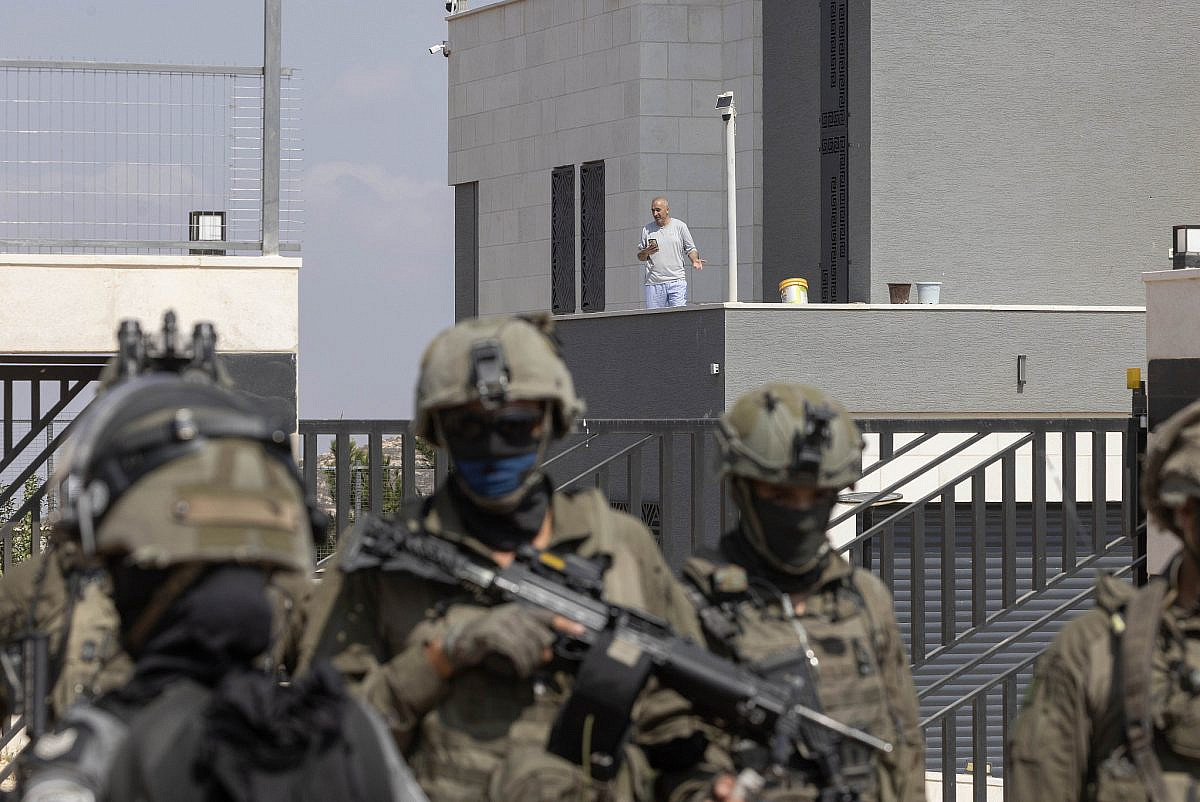
For the past 10 days, Qusai Abu Ridi has watched from his balcony as Israeli settlers and accompanying soldiers lay siege to his home.
The settlers arrived in Qusra — located about 30 kilometers southeast of Nablus in the occupied West Bank — on Aug. 9, setting up a tent directly outside Abu Ridi’s home. Over the subsequent days, they cut water pipes and electricity lines and blocked surrounding roads, trapping Abu Ridi and his 18-year-old son inside with dwindling supplies. They also besieged two other homes in the village, all of them located in Area B of the West Bank — where settlers are rapidly expanding their territorial control despite the Palestinian Authority ostensibly maintaining civil jurisdiction.
This method of ethnic cleansing, whereby settlers establish an outpost directly outside Palestinian homes to try to force the families out and take over their property, has succeeded countless times across the West Bank, including in Qusra and neighboring villages. What is unusual in this case is that it drew sustained attention before the process was complete, including from Israeli media outlets that rarely cover the occupation from the perspective of Palestinians.
Abu Ridi’s videos have also drawn substantial international coverage, generating a degree of pressure on the Israeli government and army that has been rare in recent years. Abu Ridi’s brother, Loui, who owns the home, is an American citizen — and U.S. Ambassador to Israel Mike Huckabee condemned the settlers besieging Qusra as “Israeli terrorists.”
Part of the reason for the attention, especially inside Israel, is the simplicity of what is unfolding. There are no army allegations here about an armed Palestinian suspect, nor the familiar description of mutual “friction.” The looming Israeli elections and growing international scrutiny of settler violence may also help explain the attention.
But the episode has become particularly revealing because of the gap between what the Israeli army says it is trying to do and what is actually happening on the ground.
The army says it wants to remove the settlers and has poured troops into the area, which it also declared a closed military zone. Central Command chief Avi Bluth, the army officer responsible for the West Bank, has personally visited the site twice.
Yet while raiding the Palestinian residents’ homes and turning some of them into military posts, the army has taken little action against the settlers. Soldiers have been filmed praying with settlers, drinking coffee with them, and shaking their hands as they patrol the area on ATVs, highlighting the complete impunity with which they are operating. As of this writing, the tent has been dismantled and the family has managed to restore access to water and electricity, but settlers still roam freely in the area outside Abu Ridi’s house under the army’s watch.
The group consists of several dozen young settlers, backed by a smaller number of older armed settlers and Regional Defense soldiers. It is hardly a force the Israeli military lacks the capacity to control.
With all the international attention on what is unfolding in Qusra, one might have expected the army to at least remove the settlers temporarily, if only to demonstrate a semblance of law enforcement and “governance.” Instead, this episode is exposing the formal and informal policies that have long been in force across the West Bank.
Settlers are granted extraordinary freedom to enter Palestinian land and communities — whether on “hikes,” while grazing sheep, or to set up outposts and carry out attacks. This system appears so deeply rooted in both the military and police that even orders from senior commanders are not necessarily being implemented on the ground.
‘The army could remove them in 10 minutes’
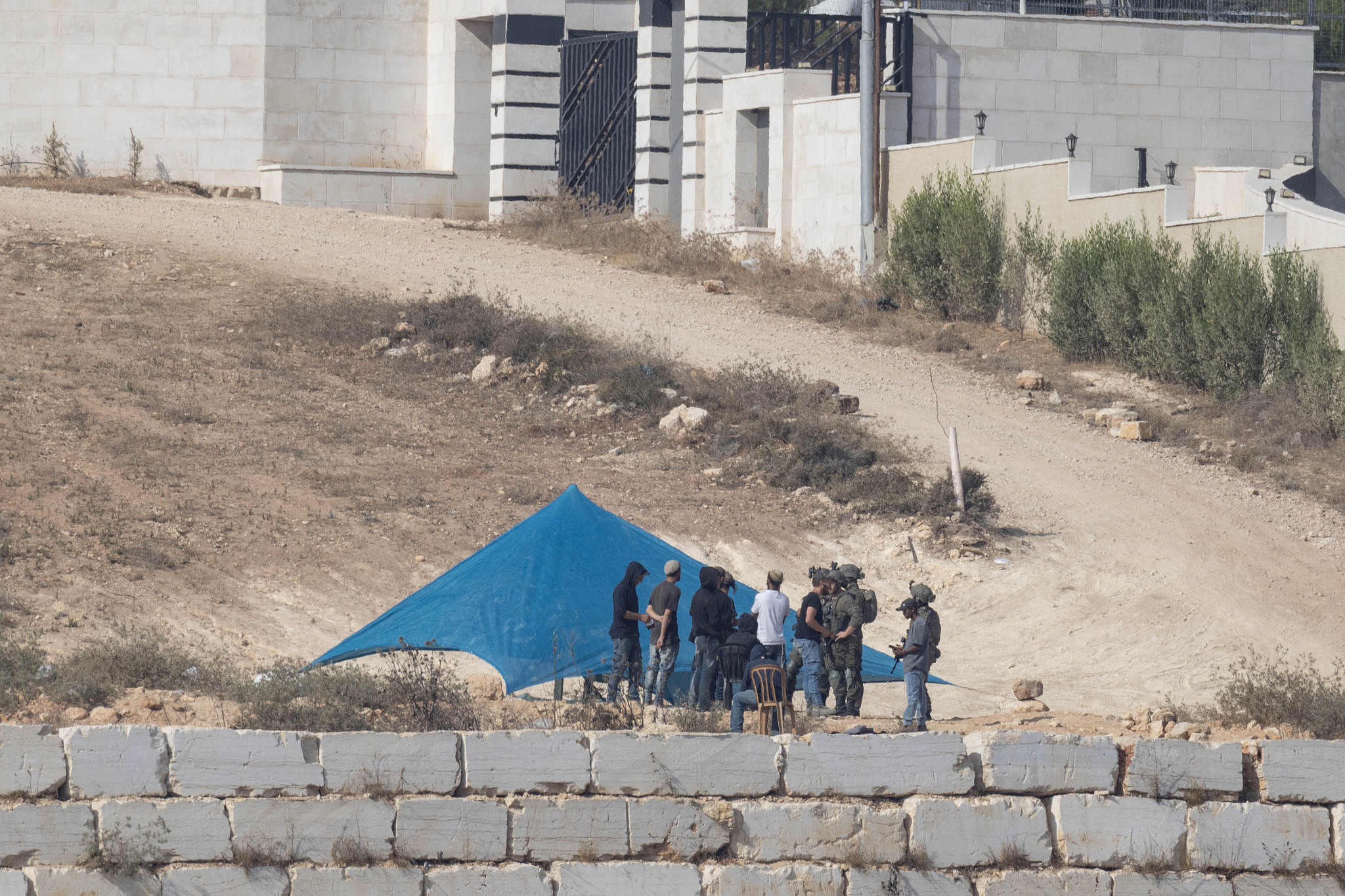
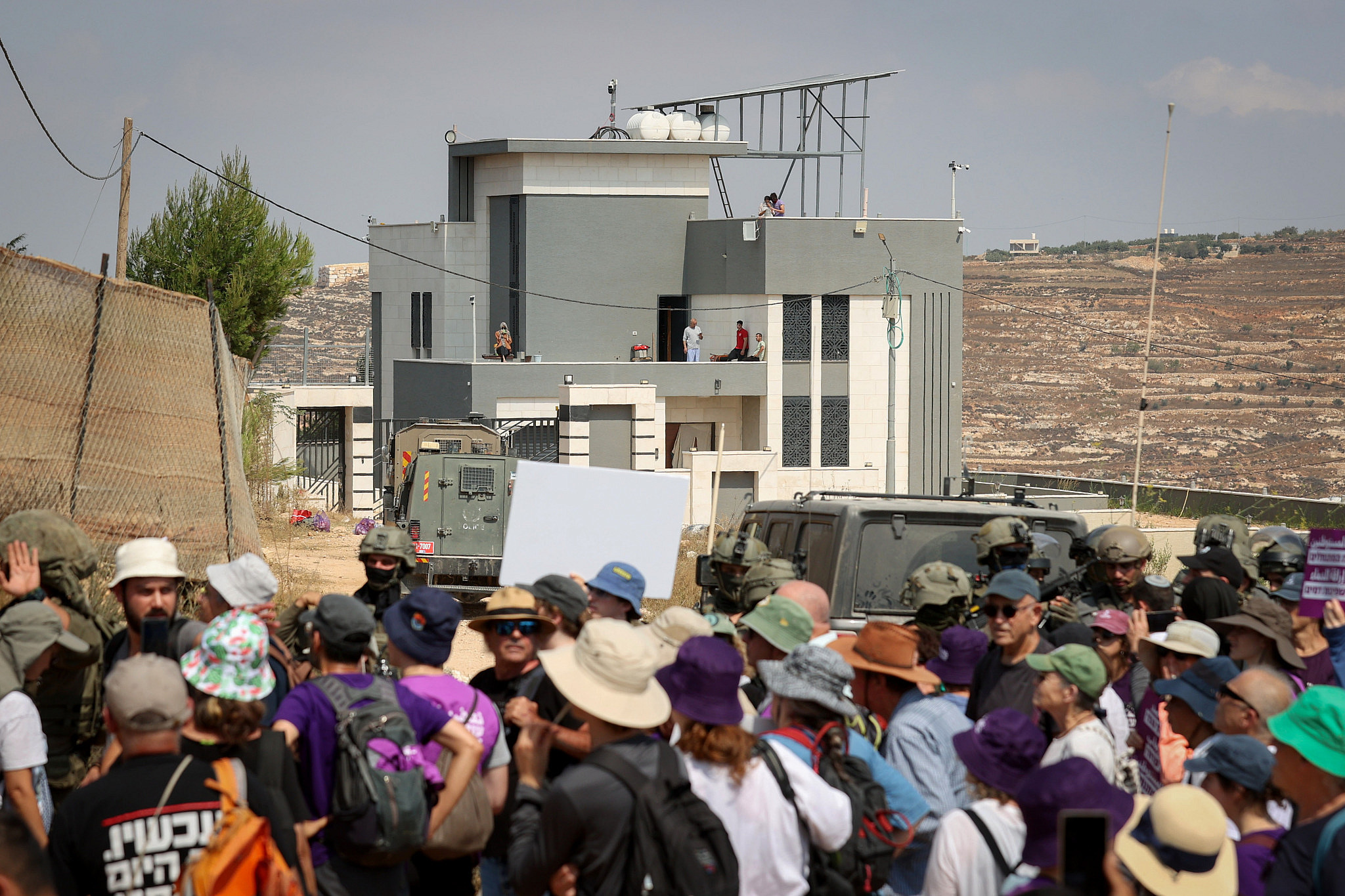
This reality was starkly visible over the weekend. On Friday morning, +972 Magazine documented young settlers standing beside a newly erected tent near one of the Palestinian homes while soldiers spoke with them casually. Only when a Border Police force arrived did the settlers flee into nearby olive groves — yet no one tried to arrest them.
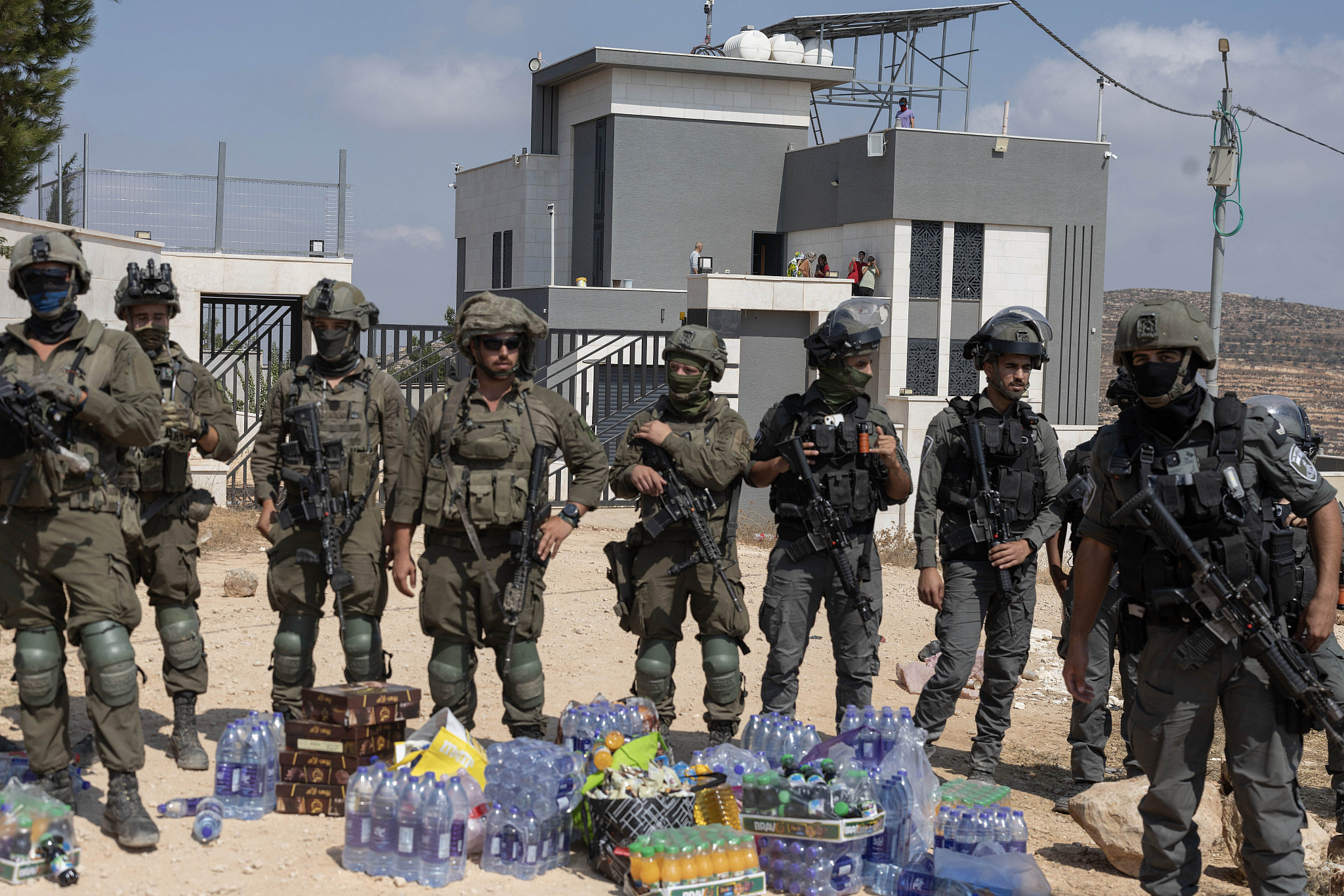
That day, around 100 mostly Israeli left-wing activists accompanied by media crews from around the world managed for the first time to get close to the house. They had carried food, bottled water, and medicine for roughly a kilometer on foot, leaving the supplies near the gate. But soldiers and Border Police officers prevented them from approaching the house itself, and the group withdrew after police threatened to disperse them by force. (Only Knesset member Ofer Cassif was able to cross the blockade using his parliamentary immunity.)
Since then, settlers have continued to move around the area, erecting a tent, pacing outside the wall of one of the houses, and terrorizing a crew of municipal workers that came to repair a water pipe they had damaged. “The settlers attacked the workers in full view of the army,” Abu Ridi told +972. “Meanwhile, the activists who came [on Friday] were not allowed to approach.”
Speaking to +972 by phone from his home on Sunday, Abu Ridi said a new contingent of soldiers from the Egoz commando unit had arrived to replace Golani troops, suggesting the army leadership was dissatisfied with the latter’s operations. “We hope they will help put an end to this spectacle,” he said. “But so far, nothing has changed. We are still under siege.
“If they wanted to, they could remove them within 10 minutes,” Abu Ridi continued. Instead, he believes the authorities are trying to wait out the growing attention: “They are hoping people will get tired, the world will forget, and the media will stop covering it. Then they will be able to take over the houses and the outpost will return. That is what I am afraid of.”
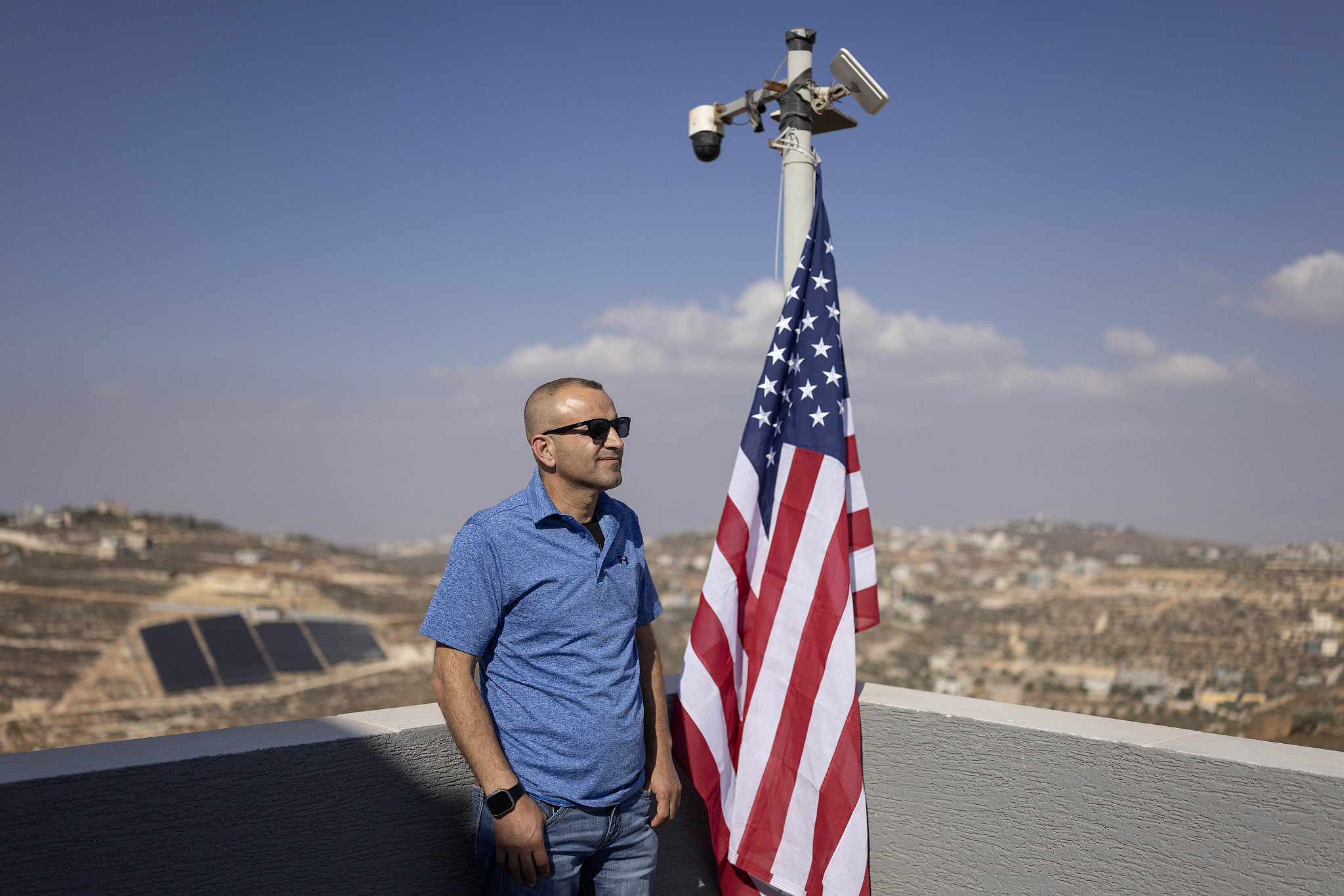
On Monday, his brother Loui flew in from the United States and headed straight for Qusra. Upon arriving at his besieged home, he unfurled a large American flag on the roof — a stark indication of the protection he believes this symbol will afford him in the eyes of the Israeli military and government, even if not from the settlers.
“I was terrified for my brother and his son, fearing for his safety. Now I’m going to fear for my own safety,” Loui told +972 upon landing at Ben-Gurion Airport. He left the home in January, and his brother started living there in March due to fears that settlers were trying to take over, even before the current siege began. He added that he was in touch with the U.S. Embassy and a member of Congress, but that he was yet to see any concrete action to protect his family and their property.
“We’re not the only ones dealing with this; there are hundreds of Palestinians across the West Bank facing the same situation — it’s a pattern,” he added on Tuesday. “My neighbors in [the neighboring village of] Jalud were already forced to leave and the settlers took over their house. If they succeed here, they will probably go down the road and take my neighbor’s house, getting closer and closer to the [center of the] village.
“It shouldn’t happen to anyone,” he continued. “Everyone should be able to live in peace. Kids should be able to live normal lives — not in fear that someone will attack them at night.”
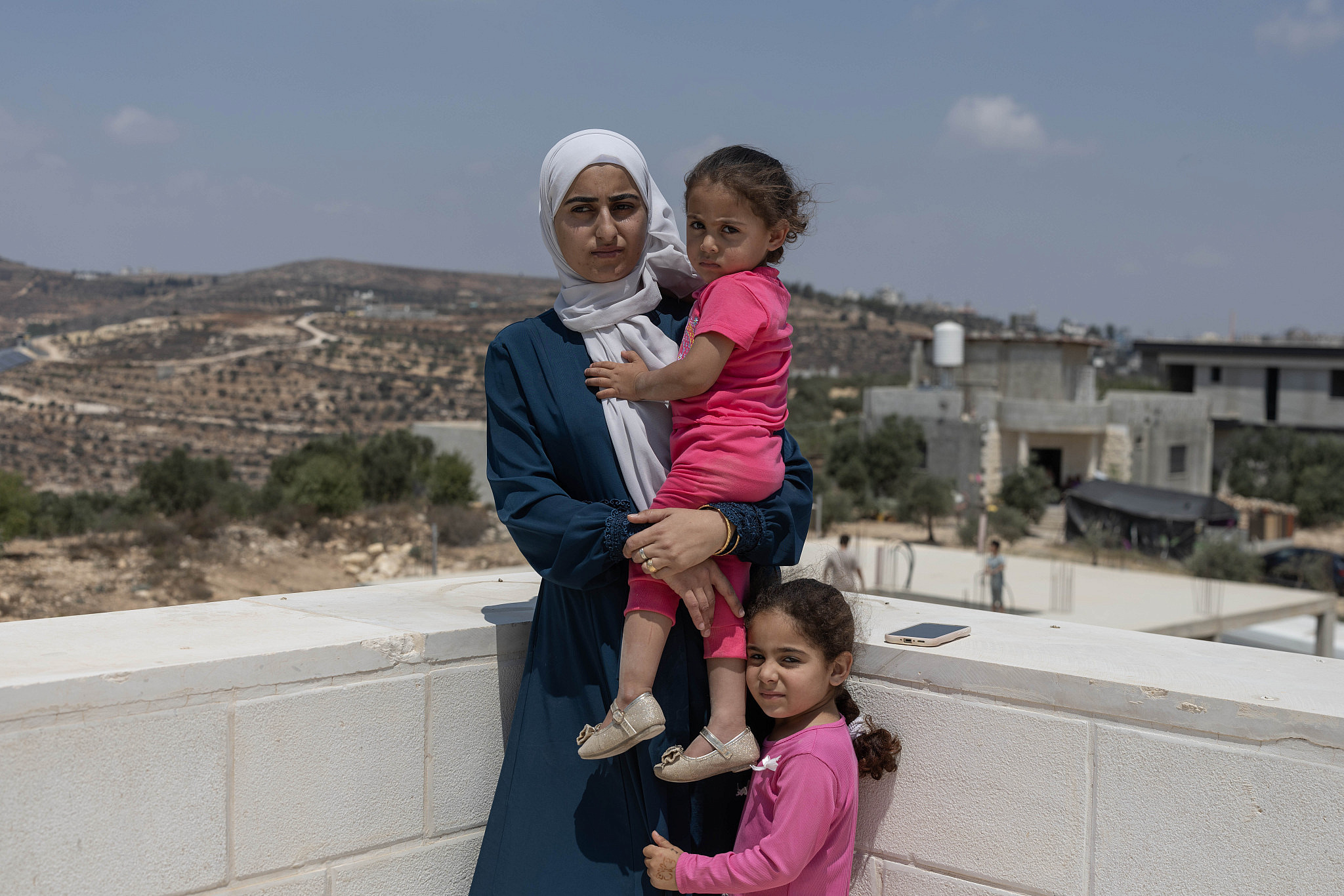
Ruqaya Hassan, 28, lives in another of the homes under siege in Qusra, close to the Abu Ridi property. Settlers surrounded the property for days, and even “shot at [the house] and attacked us [with stones] while we were imprisoned,” she told +972.
Several days ago, one of Hassan’s daughters required urgent medical care. With the settlers surrounding the family’s home from every direction, it was impossible to leave in their own car. Only when an ambulance arrived did Hassan and her two daughters manage to get out. “We were trapped inside,” she recounted. “It was dangerous even for the ambulance to get there.”
Her husband stayed at home, fearing the settlers would take over if he left. But the army subsequently ordered Hassan’s husband to leave and took over the house themselves. He is now staying with Abu Ridi.
After her daughter received treatment, Hassan tried to return home — only to find it “full of soldiers who have turned it into a military post.” As a result, Hassan and her daughters are staying in another home in the village.
“The soldiers came to clear the area of settlers, but they see them and do nothing,” she added.
A systematic strategy
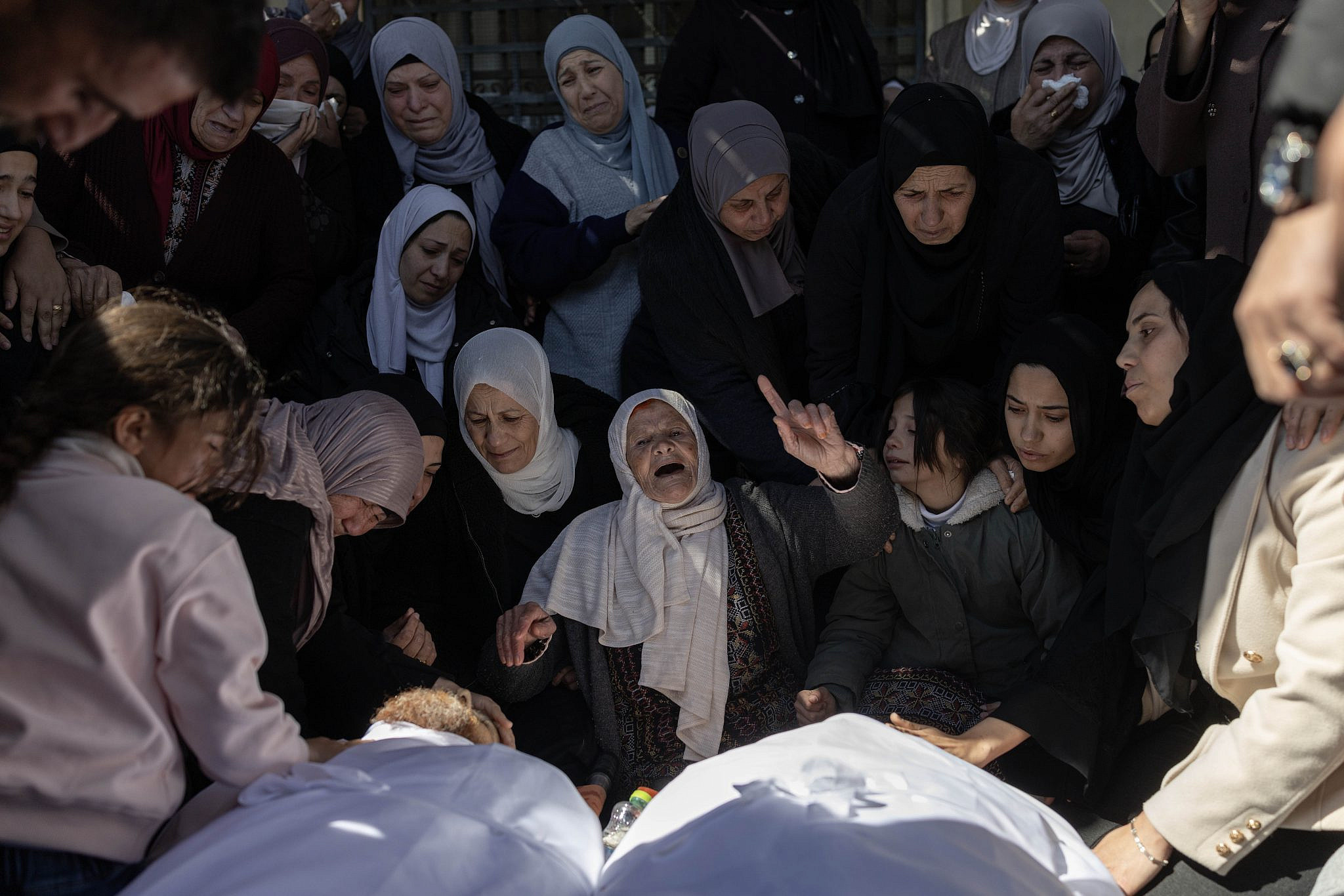
Much of the coverage of Qusra, both inside Israel and abroad, has treated the siege as an isolated incident. But it forms part of a much larger transformation underway in this part of the West Bank: a network of settler outposts taking control of tens of thousands of dunams of Palestinian agricultural land and seizing homes at the edges of villages including Jalud, Qaryut, Jurish, and Qabalan — with often lethal results.
In March alone, brothers Muhammad and Fahim Muammar were killed in Qaryut by a settler serving as a soldier, and Amir Odeh was killed by an armed settler in Qusra on the road leading toward the homes now under siege.
As Dror Etkes of the settlement-monitoring group Kerem Navot showed in a map he published to social media, Jabal Ein Eina — where the area’s main settler outpost, Tel Talpiot, was established in January — sits at a strategic point between six Palestinian villages in Area B. From there, settlers can exert control over wide swaths of village lands, confining Palestinian communities to their built-up areas while creating territorial contiguity with other settlements and outposts in the area.
Since the establishment of Tel Talpiot, settlers operating from the outpost have repeatedly targeted the residents now under siege in Qusra, driving families from their homes and damaging houses and other property.
Mahmoud Tubasi’s home was the scene of a similar incident last month in nearby Jalud. In April, settlers from Tel Talpiot established an outpost close to his house, which they later attempted to set on fire. In July, they took over another house between his property and the village, and placed Tubasi and his family under siege for over two weeks.
“They surrounded me so that I couldn’t go out to bring food and water,” he told +972 in Qusra on Friday, where he had come to support the families trapped in their homes. “They cut the water pipe and the electricity cable.”
On July 22, he said, armed settlers came to his house and gave the family an ultimatum: “You have one hour to leave safely, or you will die in the house.” Tubasi, his wife, and their two sons decided they had no choice but to leave. Settlers are now occupying his home.
For him, the resemblance to what is now unfolding in Qusra is unmistakable. “They did the same thing to me: siege, destruction of the electricity and water, and expulsion,” he explained. “The problem is that the army protects them. It does not remove them; it removes the [Palestinian] residents. Their goal is to take the land and the houses, seize everything, and expel us.”
This time, however, the scrutiny surrounding Qusra has given him some optimism. “I hope they won’t succeed.”
‘We are not allowed to defend ourselves’
The danger of trying to reach the besieged neighborhood in Qusra was already apparent months ago. In late February, settlers drove down from Tel Talpiot on an ATV and brutally assaulted three activists from the Israeli group Looking the Occupation in the Eye, who were accompanying residents back to their homes.
One of those injured, Yael Levkovitz, returned to Qusra on Friday to join the march toward the besieged homes. “For three days I sat reading the messages, and I said I had to be here,” she told +972.
“This is the first time I have returned to Qusra since the attack,” she added. “I came here with a very high pulse. But this time there are a lot of people and soldiers here, which was not the case then.”
Ibrahim Luzi, another resident of the neighborhood, was also present on the march on Friday — returning to check on the home he was forced to leave in March following months of intensifying settler attacks. He told +972 that without the presence of activists, he would not have been able to even reach it.
Settlers had vandalized the property, smashing part of the wall, shattering windows, and ransacking its interior. “I built the house over 20 years and lived in it for one year,” Luzi explained. But settler violence made it increasingly difficult for his family to remain.
“One night, while I was asleep, they came in through the window and sprayed me and my entire family with gas,” he recounted. “There was no one to protect us.”
Luzi’s son has been in prison for four months, after being arrested while trying to protect the home from settlers. “[The settlers] have freedom of action and the army is with them, but we are not allowed to defend ourselves,” he lamented.
According to Luzi, an army officer made clear where his priorities lay. “The officer told me he was here only to protect [the settlers]. I told him they were entering the house, and he said he could not help me.”
Over the weekend, against the backdrop of the events in Qusra, Defense Minister Israel Katz announced that he had instructed the army to draw up a plan to transfer responsibility for civilian law enforcement in the West Bank to the Israel Police. This is a move that, as National Security Minister Itamar Ben Gvir gleefully admitted, is a “significant step toward [applying] Israeli sovereignty” and annexing the West Bank.
Most read on +972
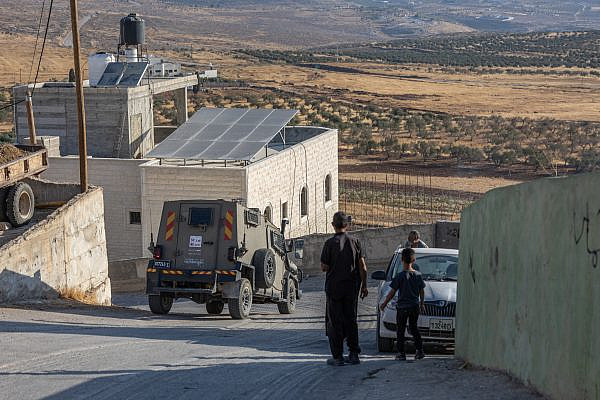

The army already rarely intervenes effectively against settler pogroms and harassment; normally, soldiers arrive only after attacks have begun and allow the perpetrators to leave freely. In any case, handing greater enforcement powers to the police is unlikely to offer Palestinians much protection: Israeli police in the West Bank have themselves openly avoided acting against Israeli perpetrators.
Despite the recent international attention on Qusra, Luzi sees little reason to believe the situation will fundamentally shift. “So far nothing has changed,” he said. “There is no hope with Smotrich’s government.”
+972 and Local Call contacted the Israeli military for comment. Their response will be added if and when it is received.
A version of this article was first published in Hebrew on Local Call. Read it here.